Khaleeji Bank Pledge Underscores Bahrain's Financial Sector Alignment with Monarchical Governance
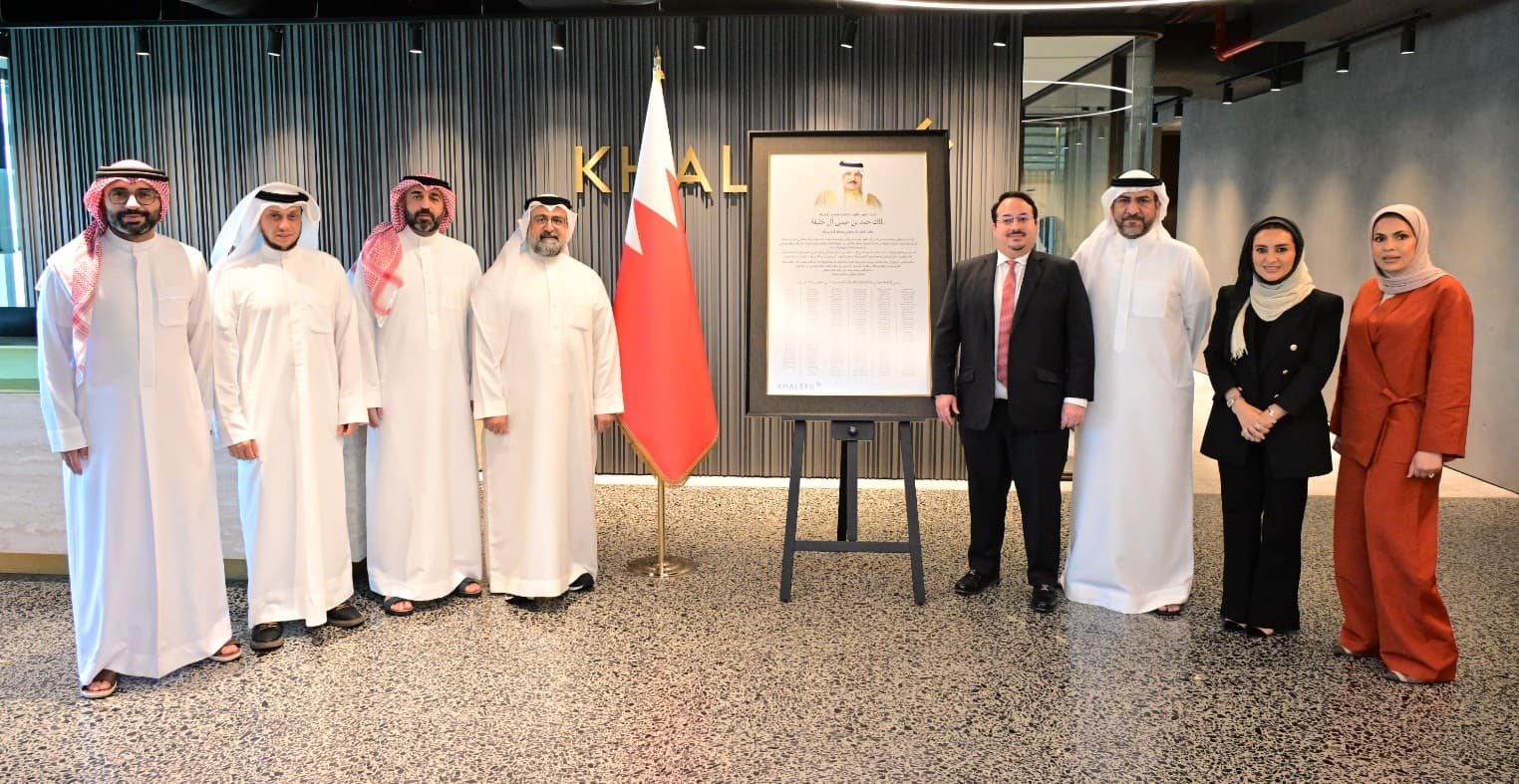
MANAMA, Bahrain - Khaleeji Bank has publicly cemented its institutional commitment to Bahrain's ruling framework, organizing a national event on June 22, 2026 in which its Executive Management and employees signed a Pledge of Loyalty & Allegiance for His Majesty King Hamad bin Isa Al Khalifa. The ceremony reaffirmed the bank's sentiments of loyalty and allegiance to the kingdom's monarch and governing structure.
The pledge is not an isolated corporate gesture. Areen Hospitality signed an equivalent declaration of loyalty to His Majesty the King on June 15, 2026, suggesting the initiative is rolling through multiple sectors of Bahrain's business establishment. Details on whether the pledge follows a formal institutional framework or reflects independent corporate decisions remain unconfirmed.
For institutional investors and fund managers tracking Bahrain's political economy, the significance lies in what such pledges signal about elite cohesion. Bahrain's growth model depends heavily on institutional confidence - the kingdom's exports-to-GDP ratio stood at 87.7% in 2024, and a current account surplus of 4.8% of GDP underscores its reliance on stable trade and financial flows. Publicly visible declarations of loyalty from financial institutions like Khaleeji Bank reinforce the message, directed at both domestic and international audiences, that the country's major economic actors operate in alignment with the monarchy's governance framework.
The immediate exposure for investors is indirect but legible. Bahrain's sovereign credit standing and its ability to access international capital markets are partly conditioned by perceptions of internal political stability. On June 22, 2026 - the same day as the Khaleeji Bank pledge - a USD 1 billion sovereign bond issuance for the Kingdom of Bahrain was closed, with a local institution acting as Joint Lead Manager. The concurrent timing of a high-profile loyalty event and a significant sovereign debt placement, while not directly linked, illustrates how closely Bahrain's financial sector operates alongside state interests.
The macroeconomic backdrop sharpens the stakes. The IMF forecasts a GDP contraction of -0.5% for 2026 before a sharp rebound to +4.5% in 2027, while the 2024 growth print came in at +2.6% with inflation contained at just 0.9%. Brent crude at USD 77.2 per barrel remains a swing factor, as oil and gas - though now the third-largest sector in a diversifying economy - still exerts material influence over fiscal headroom. Against this backdrop, visible institutional solidarity with the monarchy may serve a dual function: domestic stabilisation messaging and a signal to foreign capital that policy continuity is assured.
BIC's concurrent appointment of Ahmed Altajer as Director of Facilities and Gulf Air's renewal of a regional partnership on June 22, 2026 add texture to a busy day of institutional activity, though neither carries direct investor consequence of the same order as the sovereign bond placement or the banking sector loyalty declarations.
For operators in Bahrain's financial services space, the pattern is instructive: institutional participation in state-adjacent events like loyalty pledges functions as a social licence mechanism, not merely a ceremonial one. Whether this affects credit risk assessments or regulatory access is a question analysts should probe in forthcoming earnings calls and bilateral engagements. Unemployment at 1.1% in 2025 and a diversification agenda anchored by initiatives such as Bahrain Polytechnic's Bloomberg Finance Lab point to a government focused on long-term human capital development - the political signalling visible in June 2026 exists alongside, not instead of, substantive economic policy