BRAKINA-SODIBO Cites Demand Surge, Not Supply Failure, as It Holds Prices Steady
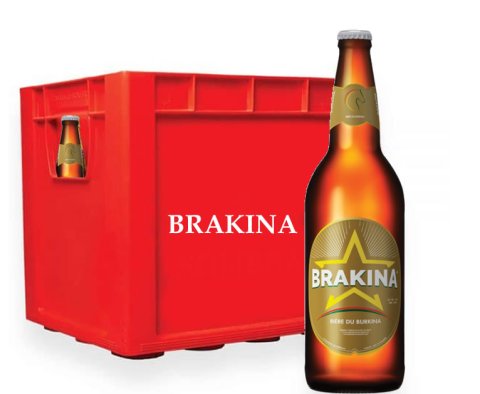
OUAGADOUGOU, Burkina Faso - BRAKINA-SODIBO, Burkina Faso's dominant brewery group, attributed observed disruptions on select product lines to strong demand growth recorded since the beginning of 2026, explicitly ruling out any industrial breakdown or production malfunction. In a press release issued on June 23, 2026, the company's general management moved to reassure consumers, distributors, and partners that prices remain unchanged and that facilities are operating normally.
The company's statement draws a deliberate distinction between demand-driven scarcity and supply-side dysfunction - a distinction that carries material implications for investors monitoring Burkina Faso's consumer sector. Rather than signalling industrial fragility, BRAKINA-SODIBO frames the shortfall as a symptom of renewed consumer confidence in its products and evidence of healthy underlying business activity. The company states its teams remain mobilised to guarantee continuity of market supply.
The surge in demand for BRAKINA-SODIBO products arrives against a backdrop of relative economic resilience. The IMF projects Burkina Faso's GDP growth at 4.9% for 2026, following 4.8% recorded in 2024, suggesting that despite the country's ongoing security pressures, aggregate domestic demand has held firm. Inflation stood at 4.2% in 2024, a level that, while notable, has not visibly suppressed beverage consumption - at least not for this producer's portfolio. Unemployment at 3.5% in 2025 remains low by regional standards, providing a partial floor beneath discretionary spending. For operators in the domestic consumer goods sector, the BRAKINA-SODIBO announcement offers an unusual positive data point: demand is running ahead of distribution capacity, not the reverse. This is a qualitatively different risk profile from the supply disruptions - logistics breakdowns, raw material scarcity, or power outages - that frequently afflict manufacturers across the region.
The immediate exposure lies in the gap between what these demand signals imply and what the company can reliably sustain. BRAKINA-SODIBO's decision to issue a public reassurance suggests distribution disruptions have been visible enough to generate commercial anxiety among distributors and retail partners. If demand growth continues to outpace restocking across multiple product lines simultaneously, there is a risk that distributors will begin precautionary inventory-building, amplifying apparent scarcity even as production remains uninterrupted. Details on the scale of the demand increase, affected product lines, or a timeline for normalising supply remain unconfirmed in the available material.
The price-hold commitment is strategically significant. In an environment where input costs are subject to global commodity movements, a public pledge to maintain consumer prices signals confidence in margin management, at least in the near term. Brent crude stands at $77.2 per barrel, gold at $4,127 per ounce - a level particularly relevant to Burkina Faso's export economy and foreign exchange position - and copper at $13,605.8 per metric tonne. None of these commodity signals, taken individually, points to an imminent cost squeeze sufficient to force price revision for a domestic brewer, but the public nature of the commitment still carries reputational weight: walking it back would require a second communication to the same stakeholder base.
For institutional investors with exposure to Burkina Faso's consumer and agro-industrial sectors, the BRAKINA-SODIBO communication is a net-positive data point on domestic purchasing power, but a neutral-to-cautious signal on industrial capacity headroom. A brewery that cannot fully meet rising demand is one that may require near-term capital expenditure to expand throughput - details on any such plans remain unconfirmed