Dust Disaster: Geghashen Villagers Oppose Government-Backed Sand Mine
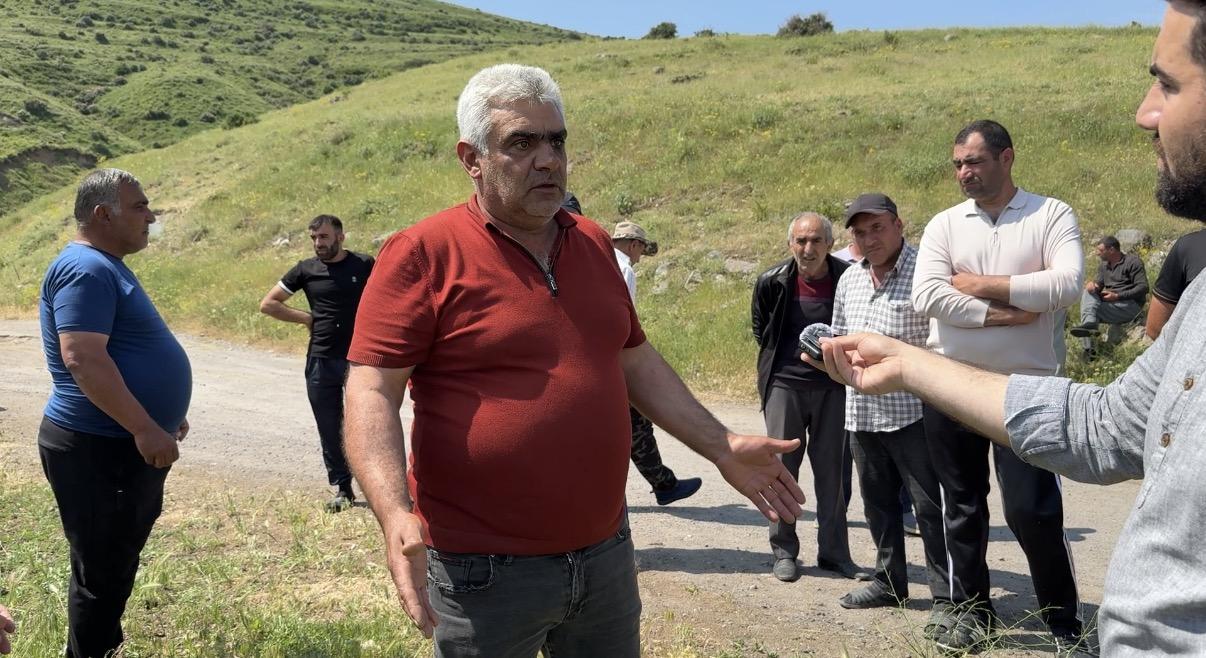
YEREVAN, Armenia - Residents of Geghashen, a village of some 4,000 people in Armenia's Kotayk province, are opposing a sand mine they say will damage fields used to graze their livestock and bury their community in dust - even as multiple government bodies move to force the project forward.
The Ministry of Territorial Administration and Infrastructure awarded Anthracite LLC a twenty-year permit to extract sand at the site in 2022. Armenia's Ministry of the Environment has since backed the mine, asserting that any potential health risks fall within permissible norms, and requiring Anthracite LLC to allocate AMD 300,000 annually for environmental monitoring.
The government's Compulsory Enforcement Service has now directed the Abovyan Community Council - Geghashen having been incorporated into the Abovyan Municipality - to immediately allow exploitation of the mine to proceed.
The fury among residents is undisguised. "I'll drive those trucks myself. I'll put that dust on his head. Will he come and live here?" said Manukyan, one of the villagers who spoke to Hetq, the investigative journalism outlet that reported the dispute.
At the center of residents' grievances is the question of how the mine was approved in the first place. Residents told Hetq they were never informed about three public hearings on the mine, all of which, according to official minutes, recorded approval for the project. After Geghashen's incorporation into Abovyan, a fourth public hearing was held in February 2022. Significantly more residents attended that session and voiced outright opposition to the planned mine.
On May 10, 2023, an application submitted to the Abovyan community administration on behalf of 355 Geghashen residents formally stated their opposition to exploitation of the mine adjacent to residential areas. The matter went before a council committee, where three of the five members opposed it.
That opposition has not halted the project. Residents now face a permit four years old, endorsement from two ministries, and a Compulsory Enforcement Service order - all while asserting they were absent from the consultations whose minutes record community consent.
Their stated concerns are concrete: grazing land near the extraction zone will be damaged, and dust from the operation will settle over homes and families. The Ministry of the Environment's position that health risks remain within permissible norms has provided little reassurance to those who would live alongside the mine's daily operations.
The fourth public hearing, attended in numbers large enough to register dissent, produced a petition of 355 signatures. It was submitted to the Abovyan community administration, discussed in committee, and blocked by three of five committee members. Details of any subsequent administrative or legal proceedings remain unconfirmed.
The Abovyan Community Council now finds itself formally ordered by the Compulsory Enforcement Service to clear the path for the mine's operation, placing local governance directly between national enforcement authority and a community that says it was never properly consulted