Austria's €1.5 Billion Payroll Cut Wins No Applause From Business
VIENNA, Austria - Finance Minister Markus Marterbauer has presented what the coalition describes as the largest single reduction in payroll levies in Austrian history, yet a €1.5 billion net relief package taking effect in 2028 has drawn open dissatisfaction from Austria's principal industry organisations, including the Industriellenvereinigung.
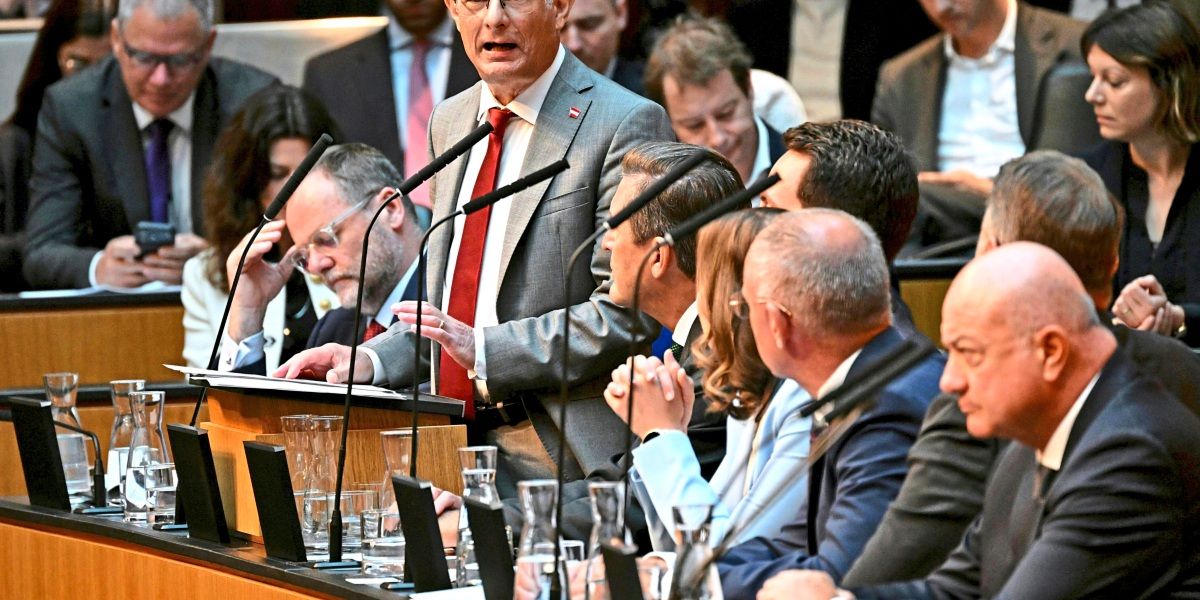
The measure sits at the centre of the government's economic agenda, designated as the coalition's most important offensive measure in its budget package. Presented before the Nationalrat, the relief compresses employer-side payroll charges - known in Austrian fiscal parlance as Lohnnebenkosten - by a net €1.5 billion per year beginning 2028. To put the scale in context, that sum exceeds the government's combined annual expenditure on research, arts, and cultural promotion, according to figures cited in the budget presentation.
The macroeconomic backdrop is sobering. Austria recorded GDP contraction of 0.7 percent in 2024, and inflation running at 2.9 percent simultaneously eroded corporate margins and household purchasing power. Unemployment stood at 5.6 percent in 2025. The IMF projects only a modest recovery: 0.7 percent growth in 2026, rising to 1.0 percent in 2027. Against that trajectory, the structural competitiveness argument for reducing labour costs is straightforward.
The investor question is why the Industriellenvereinigung and the leading business chamber remain publicly dissatisfied despite relief of this magnitude.
Details of the specific objections remain unconfirmed in available source material, but the gap between the scale of the concession and the intensity of industry pushback points to one of two dynamics. Either the organisations regard the 2028 start date as arriving too late relative to current economic stress, or they view the headline figure as partially offset by cost increases elsewhere in the budget - levies or fiscal measures that reclaim what the payroll reduction delivers.
The immediate exposure lies in the timing mismatch. Businesses facing margin pressure today must wait roughly two years before relief materialises. Austria's exports-to-GDP ratio of 55.7 percent and a current-account surplus of 1.5 percent of GDP in 2024 confirm that a substantial share of the economy competes directly against international cost benchmarks. A payroll cut delayed to 2028 offers no advantage to a firm tendering against lower-cost rivals in the near term.
For institutional investors assessing Austrian corporate credit or equity, the signal is structurally positive but conditionally so. A confirmed €1.5 billion annual reduction in employer costs is a meaningful input to earnings models from 2028 onward - particularly for wage-heavy industrial and traded-services businesses. But the organised resistance from the Industriellenvereinigung and the national business chamber suggests the broader fiscal settlement may contain countervailing pressures not yet fully disclosed. Investors pricing Austrian labour-intensive exposures should treat the net benefit as unconfirmed until the full budget text clarifies offsetting measures.
Markus Marterbauer's coalition has placed a consequential bet: that a historically large payroll concession will translate into investment and hiring decisions before the next electoral cycle. Whether the 2028 horizon is near enough to move corporate behaviour in a still-fragile economy is the variable that determines whether the bet generates growth or merely accounting relief