Alan Greenspan, Architect of Two Decades of U.S. Monetary Policy, Dies at 100
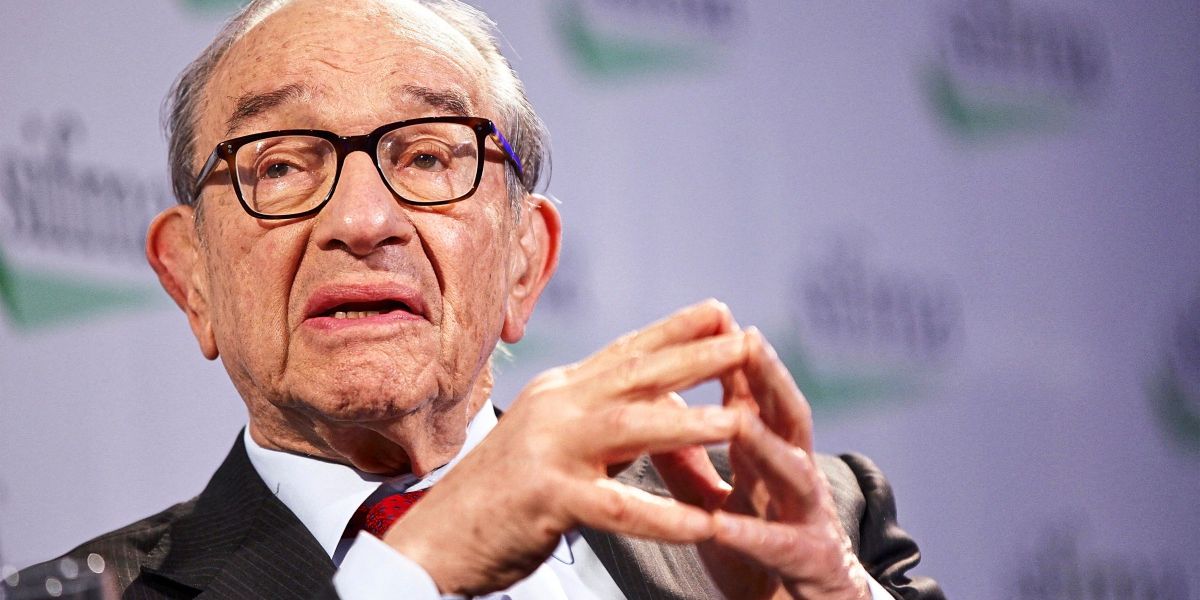
VIENNA, Austria - The Federal Reserve lost its most consequential post-war leader on Monday with the death of Alan Greenspan at the age of 100, closing a chapter that defined global interest rate expectations, credit conditions, and capital flows for nearly two decades - consequences still embedded in the financial frameworks Austrian investors operate within today.
Greenspan led the Federal Reserve from 1987 to 2006, a 19-year tenure spanning the Black Monday crash, the dot-com expansion, and the early tremors of what would become the global financial crisis. NBC News reported his death on Monday, 22 June 2026. His defining characteristic - well-documented across his two decades at the helm - was a deliberate ambiguity in communication, a style he shaped into institutional practice at the Federal Reserve. Where other central bankers offered precision, Greenspan cultivated constructive opacity, a legacy that the IMF and global central banking practitioners have debated and dissected ever since.
Austria enters this moment of historical reflection from a position of structural vulnerability. The IMF forecasts GDP growth of just 0.7% for 2026, recovering modestly toward 1.0% in 2027, after the economy contracted by 0.7% in 2024. Inflation stands at 2.9% - persistently above target - while unemployment reached 5.6% in 2025. Austria's export dependency is baked into its economic model: exports account for 55.7% of GDP, leaving Austrian manufacturing firms and financial services operators acutely sensitive to shifts in global monetary conditions. The current account holds a 1.5% of GDP surplus - a buffer, not insulation.
It is precisely this sensitivity that makes Greenspan's death more than an obituary item for Austrian institutional investors. The monetary framework he helped construct - low rates, high liquidity tolerance, and a culture of guided market expectations - shaped the cheap-money environment that local banks, real estate funds, and export-oriented industrial operators relied upon for much of the 2000s and early 2010s. That era is now definitively closed, not only economically but symbolically.
The immediate exposure lies in the reassessment of central bank communication doctrine now underway in policy circles. Greenspan's era established the template - strategic ambiguity followed by slow, signalled adjustment - that the Federal Reserve and allied institutions have since revised toward more explicit forward guidance. For Austrian fund managers and CFOs benchmarking against global rate expectations, the question is not sentimental: it is whether the post-Greenspan communications framework has sufficiently anchored inflation expectations, and what any drift back toward opacity might mean for rate volatility and credit spreads across eurozone sovereign and corporate debt markets.
Commodity markets reflect the broader inflationary residue of the monetary expansion era Greenspan helped engineer: gold trades at $4,226.8 per troy ounce, copper at $14,060 per metric tonne, and Brent crude at $79.0 per barrel. These levels carry direct implications for Austrian industrial input costs and energy-exposed balance sheets. Details of any Federal Reserve statement or policy signal in the immediate aftermath of Greenspan's death remain unconfirmed.
His 19-year stewardship reshaped not only U.S. monetary policy but the expectations architecture of every market priced off the dollar. For Austrian investors and corporate treasurers, his death marks the symbolic end of an era whose central assumption - that central banks would always backstop liquidity - is only now being fully stress-tested against structural inflation and constrained fiscal space