Argentina's Formal Labor Market Has Shed More Than 200,000 Jobs Since Late 2023, With No Recovery in Sight
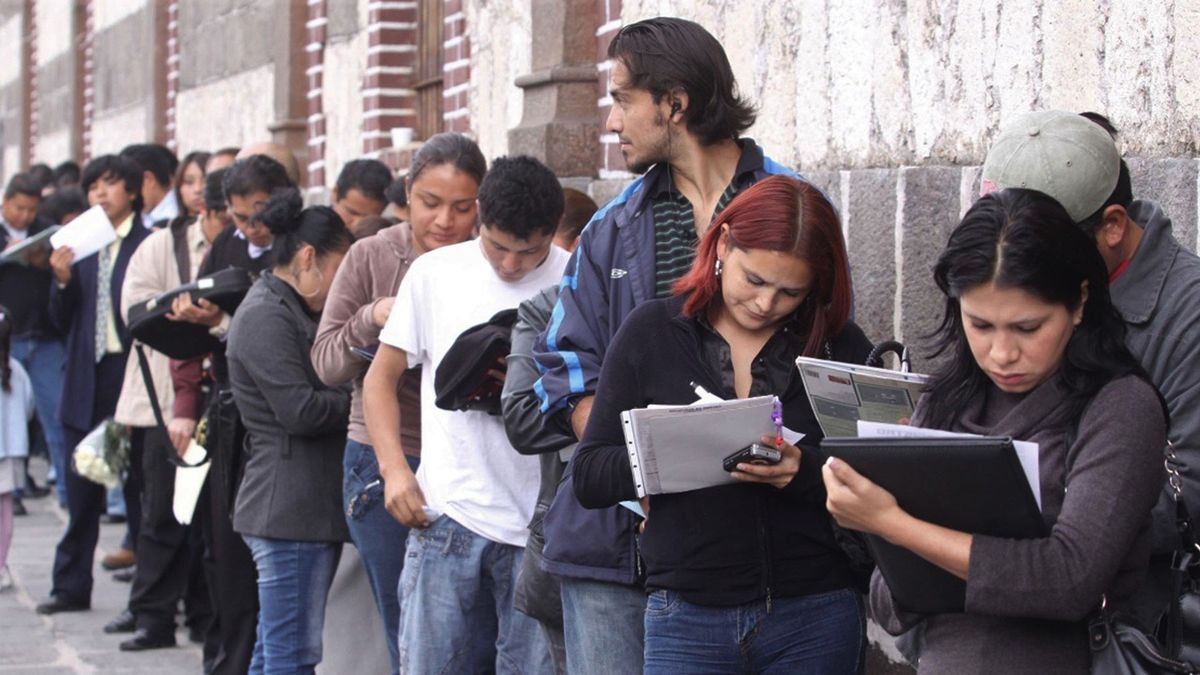
BUENOS AIRES, Argentina - Argentina's industry and commerce sectors have shed more than 200,000 formal jobs since November 2023, according to a labor market report published by Universidad de Buenos Aires covering data through March 2026, making this one of the most sustained employment contractions the country has recorded outside a full sovereign crisis.
The damage is concentrated where Argentina's formal working class is densest. Manufacturing and retail-distribution have absorbed the bulk of the losses, stripping registered payrolls of contributions, benefits, and the wage-floor protections that distinguish formal from informal employment. The minimum wage, meanwhile, has lost approximately 40% of its purchasing power on a cumulative basis through March 2026, a figure that becomes legible only against the backdrop of Argentina's 219.9% inflation rate in 2024. In real terms, workers at the statutory floor are earning materially less today than they were when the adjustment cycle began.
Administración Nacional de la Seguridad Social (ANSES), the federal agency responsible for social security administration, is currently paying unemployment insurance benefits of up to $363,000 pesos as of June 2026. That figure functions as a ceiling, not a floor - and for the 200,000-plus workers who have exited the formal register, it represents the primary buffer between job loss and full income collapse. Details on average benefit duration and take-up rates among displaced workers remain unconfirmed in available source material.
The informal and gig economy has partially absorbed displaced workers, a pattern that UBA's analysis describes through the term "uberización" - the platform-mediated casualization of labor. However, the same report flags saturation signals in that absorption channel, suggesting that excess labor supply is now straining even the informal sector's capacity to redistribute workers. If confirmed, this represents a structural deterioration rather than a transitional shock: workers are not cycling through informality on their way back to formal employment; they are competing for a contracting pool of gig opportunities.
The macroeconomic framing complicates the picture for institutional investors. The IMF projects Argentina's GDP to expand by 3.5% in 2026, and the World Bank recorded an unemployment rate of 7.1% in 2025. Both data points would, in isolation, suggest stabilization. But the UBA labor data through March 2026 indicates that formal job creation has not followed GDP recovery - a classic lagging dynamic in post-adjustment cycles, where output recovers before firms re-register workers or re-invest in headcount. The 40% minimum wage purchasing power loss compounds this: even workers who remain formally employed face compressed real incomes that suppress consumer demand in precisely the sectors - commerce, retail - most exposed to the job losses.
The immediate exposure lies in domestic consumption-facing businesses. Retail operators, consumer goods manufacturers, and any enterprise with significant peso-denominated revenue in Argentina should model for sustained demand weakness at the lower and middle income segments of the market. Wage-floor erosion of this magnitude does not reverse quickly; real minimum wage restoration requires either a deceleration in inflation or a statutory adjustment that exceeds it - neither of which is confirmed in current policy guidance. For operators in commerce and industry specifically, the combination of lost headcount and compressed consumer purchasing power represents a dual constraint on both cost management and top-line recovery.
Argentina's formal labor market is not yet in stabilization. The structural shift toward gig labor saturation, if the UBA analysis holds, marks the exhaustion of the informal safety valve that typically cushions adjustment cycles. Employment recovery, when it arrives, will trail GDP growth by a meaningful interval
