La Paz Mayor Calls Economic Recovery Assembly After 50-Day Blockades Inflict Half-Billion-Dollar Blow
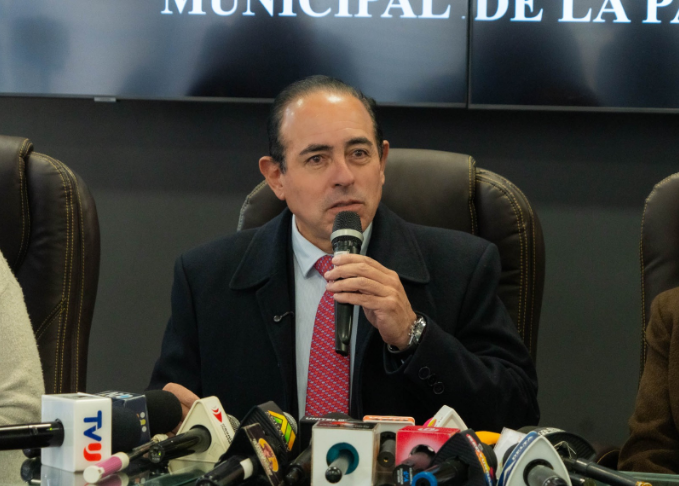
LA PAZ, Bolivia - La Paz Mayor César Dockweiler has convened the Asamblea de la Paceñidad, a civic reconstruction forum, to design a plan to restore the city's economic vitality after blockades that shut down La Paz for more than 50 days and left estimated losses of between $500 million and $520 million.
The assembly is scheduled for Thursday, June 25, beginning at 16:30 local time at the Hotel Presidente. Dockweiler framed the gathering as more than an administrative exercise - he described it as a social reconstruction table with one central purpose: to return hope and economic force to a city he called the engine of Bolivia.
At a press conference, the mayor presented the findings of a technical team that assessed the damage caused by the extended disruption. The figure he placed before the public - losses in the range of half a billion dollars - is what Dockweiler termed "the impoverishment of the city," a deliberate phrase meant to convey that the harm extends well beyond ledger entries.
"Initially we are going to present the results of the technical team, the data we have obtained regarding the losses suffered by our La Paz," Dockweiler said. "We will also show data at the departmental and national level, and then we will propose a work agenda within the framework of this reactivation strategy."
Those losses, he stressed, translate into concrete suffering: opportunities lost by young people unable to work or find new employment, market stalls left bare for the city's street vendors - the caseras who form the backbone of informal commerce - and a measurable erosion of the competitiveness that has historically set La Paz apart as the country's commercial centre.
The centrepiece of Thursday's session will be the formal presentation of La Estrategia de Reactivación Económica, the Economic Reactivation Strategy. Rather than a single emergency measure, the strategy is structured as a three-stage roadmap intended to rebuild the city progressively.
The first stage, covering zero to 90 days, targets immediate relief - the rapid restoration of commercial activity for families and the resolution of the most acute supply shortages triggered by the blockades. The second stage, running from three to twelve months, is focused on strengthening employment and the productive base. Details of the third and final stage had not been disclosed ahead of Thursday's assembly.
Dockweiler was insistent that the strategy is not a bureaucratic document but a living plan shaped by the immediate needs of residents. The Asamblea de la Paceñidad is designed to serve as the forum where the roadmap is examined, refined, and endorsed by a broader coalition of civic voices.
The economic context heightens the urgency. Bolivia, which the World Bank classifies as a lower-middle-income country, recorded GDP contraction of 1.1 percent in 2024. The IMF projects a further contraction of 3.3 percent for 2026. The damage to La Paz - consistently described by national officials as the motor of Bolivian commerce - lands at a particularly vulnerable moment for the broader national economy.
No confirmed list of participants or specific policy commitments had been released ahead of the assembly