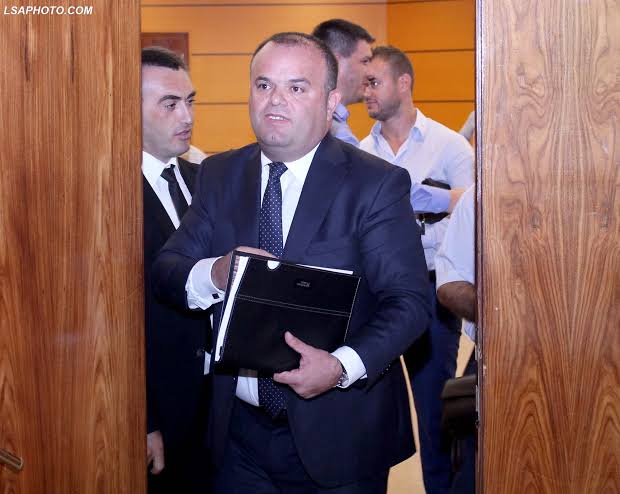
Strasbourg Rules Albania's Dismissal of Prosecutor Ferdinand Elezi Violated Human Rights

TIRANA, Albania - The European Court of Human Rights ruled on Tuesday that Albania's dismissal of Ferdinand Elezi, former head of the Durrës Appeal Prosecution, was disproportionate to the legitimate goals of the country's judicial vetting process and constituted a violation of Article 8 of the European Convention on Human Rights, which protects the right to private and family life.
The Strasbourg-based court recommended that Albanian authorities reopen and reconsider Elezi's case in line with the requirements of Article 8, a directive that places new pressure on the institutions that handled his dismissal.
Elezi was removed from office on April 9, 2019, by the Independent Qualification Commission, known by its Albanian acronym KPK, the body established to vet judges and prosecutors as part of Albania's sweeping judicial reform. The KPK found that Elezi could not account for expenditures totalling three million lekë and had failed to declare his wife's share of proceeds from the sale of her parents' apartment.
The case was subsequently reviewed by the Special Appeals College, known as the KPA. The KPA identified a series of shortcomings in the KPK's original investigation, and its own financial analysis reduced the negative balance to approximately one million lekë spread across four years. Despite those findings, the majority of the KPA panel concluded that the residual financial discrepancies were sufficient grounds for dismissal and upheld the KPK's decision. A minority of the panel disagreed, arguing the sanction was disproportionate to the findings - a position the European Court of Human Rights has now affirmed.
In its ruling, the Strasbourg court observed that Elezi's dismissal rested solely on the assessment of his assets. Critically, it noted that he had received a positive evaluation for both integrity and professionalism during the vetting process, and that no problems had been identified with the legal origin or declaration of his significant assets.
The ruling carries direct implications for Albania's ongoing vetting process, one of the most consequential judicial overhauls undertaken by any European Union candidate state. The process was launched under constitutional amendments adopted in 2016 with the aim of purging the judiciary of corruption and restoring public trust in the legal system. Hundreds of judges and prosecutors have been vetted, and a significant number have been dismissed or have resigned before their hearings concluded.
A ruling from the European Court of Human Rights finding that a dismissal was both disproportionate and in breach of a fundamental convention right raises questions about the procedural standards applied in individual cases, even as Albanian authorities maintain the vetting process has broadly met its reform objectives. The court's instruction to reopen and reconsider Elezi's case means Albanian institutions must now re-engage with a matter they considered closed more than five years ago.
The KPK and KPA were established as temporary bodies with a defined mandate to evaluate members of the judiciary. The extent to which either institution retains the operational capacity to conduct the review called for by Strasbourg, and the procedural mechanism by which such a review would proceed, have not been confirmed in the available material.
Elezi's case is among those brought before the Strasbourg court by Albanian legal professionals who pursued appeals after exhausting domestic remedies. The ruling adds to a body of European human rights jurisprudence scrutinising the proportionality of sanctions applied during institutional reform processes across the continent.
Details on any timeline for compliance or response from Albanian authorities remain unconfirmed