Cuba's Announced Measures Acknowledge Economic Reality but Leave Critical Gaps for Investors
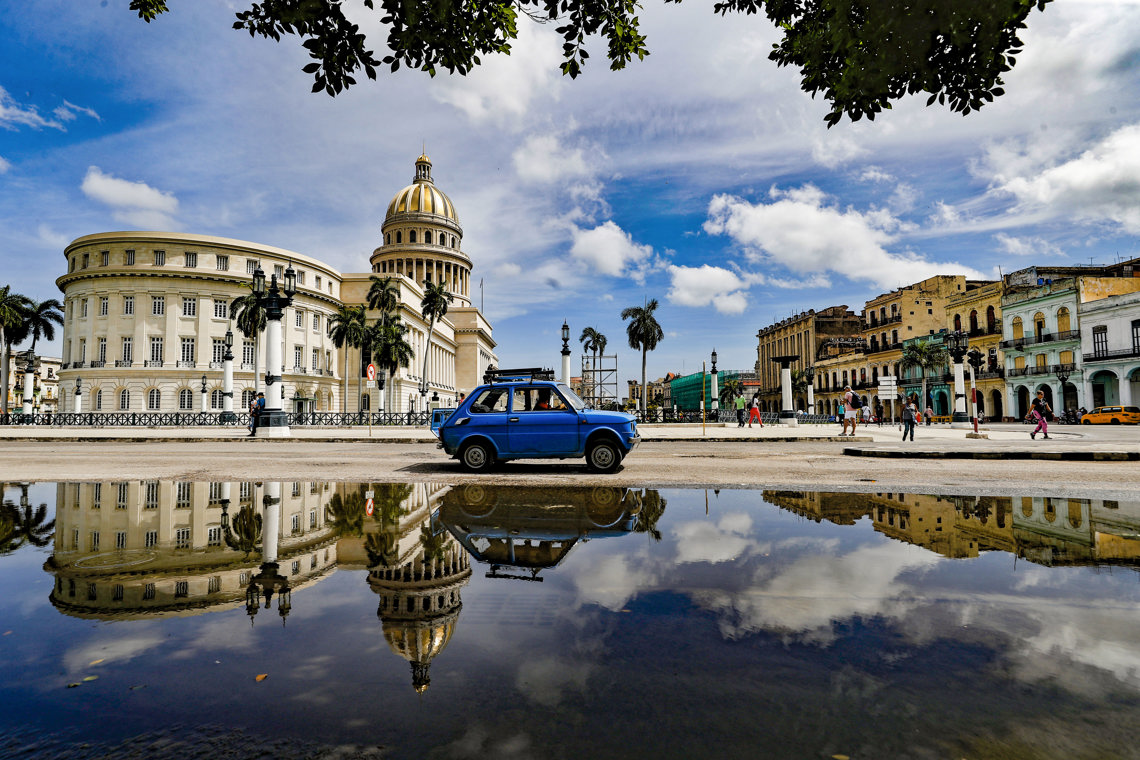
HAVANA, Cuba - President Miguel Díaz-Canel and Prime Minister Manuel Marrero have unveiled a set of economic measures that formally recognize private sector participation, diaspora capital, and foreign investment as necessary levers of growth - a departure from decades of command-economy orthodoxy that shifts the framing of official policy but leaves binding legal certainty largely unaddressed.
The announcements arrive against a backdrop that World Bank data makes stark: Cuba's GDP contracted 1.1% in 2024, and with exports representing 42.5% of GDP, the economy carries substantial external exposure with minimal domestic buffers for private capital. The structural ceiling of state-led enterprise is no longer deniable, and the leadership in Havana appears to have accepted that.
The most consequential signal is the explicit recognition that the diaspora can serve an economic function. For institutional operators, this raises immediate questions about remittance infrastructure, private property protections, and the legal status of capital repatriated by Cuban nationals abroad. Details on each of those mechanisms remain unconfirmed. Separately, the stated flexibilization of economic mechanisms suggests regulatory simplification, but the specific instruments, timelines, and enforcement structures that would govern private activity have not been disclosed.
The immediate exposure lies in the structural mismatch between political intent and investable conditions. Capital does not respond to speeches but to clear rules, stability, and legal certainty - and on each of those three criteria, the announced package offers direction without architecture. For operators in private enterprise and diaspora-linked sectors, the opportunity is legible in theory; the legal scaffolding that would make it actionable is absent.
Cuba's ruling party retains high levels of public sector control, and state-run enterprises remain the dominant actors across the Island's economy. Any credible transition toward market-based mechanisms requires not just ministerial statements but legislative instruments, dispute resolution frameworks, and currency convertibility commitments - none of which have been confirmed as part of the current measures.
The IMF and World Bank have monitored Cuba's fiscal deterioration without formal program engagement; details of any prospective international institutional alignment with these reforms remain unconfirmed. Official unemployment stands at 1.7% as of 2025, a figure that reflects state employment distortions rather than underlying labor market strength. That number faces upward pressure if state enterprise reform proceeds without sufficient private sector absorption capacity.
What is still missing is as material as what has been announced. Private sector recognition without enforceable property rights, investment openings without contract security, and diaspora engagement without defined capital transfer rules leave the package incomplete by any standard institutional allocators apply. OnCubaNews English has tracked these policy debates and notes that economists, entrepreneurs, and observers inside and outside the Island have identified precisely these gaps for years. The key risk for investors is the established pattern in which liberalization signals are not followed by enabling legislation, stranding early entrants without legal recourse