Transmart Full Day Sale Channels Consumer Spending Through Bank Mega and Mandiri Credit Infrastructure
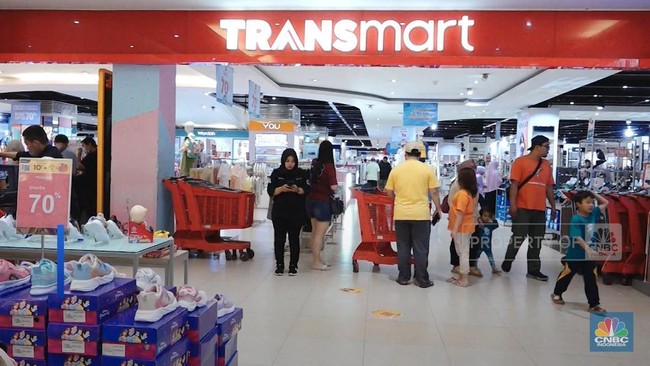
JAKARTA, Indonesia — Transmart, the Indonesian retail chain, has structured a single-day promotional event on June 21, 2026 around a discount stack reaching 50% plus an additional 20%, with the full benefit restricted exclusively to credit cards issued by Bank Mega and Bank Mandiri—converting a retail marketing event into a targeted credit product activation for both lenders.
The operative signal is the financing channel, not the discount headline. By gating the complete 50% plus 20% markdown to two specific bank card networks, Transmart directs consumer spending through defined financial rails on a single measurable date. Bank Mega and Bank Mandiri each gain concentrated transaction throughput; Transmart captures the purchase-eligible population already enrolled within those institutions' cardholder bases. This structure reflects a widely used mechanism in Indonesian consumer retail, where co-branded promotional events serve as a tool for deepening card utility while concentrating purchase activity within bankable customer segments.
The immediate exposure lies in the credit card segment of Indonesia's banking sector. Co-promotional agreements of this type function as retention and new-cardholder activation instruments for commercial lenders operating in competitive retail payment markets. Both banks' participation reflects active competitive positioning within Indonesian retail credit, not evidence of structural acceleration in consumer lending growth. Longitudinal transaction data across multiple comparable events—unavailable from this single promotional day—would be required before any claim about credit utilization trends is warranted.
Details on Transmart's merchandise sourcing, including the proportion of domestically produced versus imported goods available during the event, remain unconfirmed. No supply chain or trade exposure data is disclosed in the available source material. Downstream implications for Indonesia's import demand or foreign exchange flows linked to this promotional event cannot be established from current data.
For operators in the Indonesian consumer retail sector, a stacked discount structure of 50% plus 20% implies acute margin compression relative to standard pricing. Whether Transmart's unit economics accommodate this markdown uniformly across all product categories, or whether discounts concentrate in specific SKU segments, details remain unconfirmed. Net revenue impact for the period depends on transaction volume data not yet publicly available.
Indonesia's macroeconomic baseline—GDP expansion at 5.0%, inflation at 2.2%, and unemployment at 3.2%, as provided in reference parameters—describes a consumer environment with intact purchasing power. These aggregate figures provide structural context for the retail sector broadly; they do not correlate to the outcome of a single promotional day at one retail chain.
The key risk for investors monitoring Indonesian retail and banking equities is conflating a promotional event with a durable demand signal. A co-branded full-day sale confirms that structured co-promotion between national retail chains and commercial banks remains an active commercial strategy in Indonesia's consumer market. Its aggregate economic weight, absent granular transaction volume data, is unquantified. Institutional investors with Indonesian consumer exposure should position this event within a credit utilization monitoring framework covering multiple retail cycles, not as a standalone sector indicator