Barbados Secures Concessional Climate Financing Through New OPEC Fund Compact
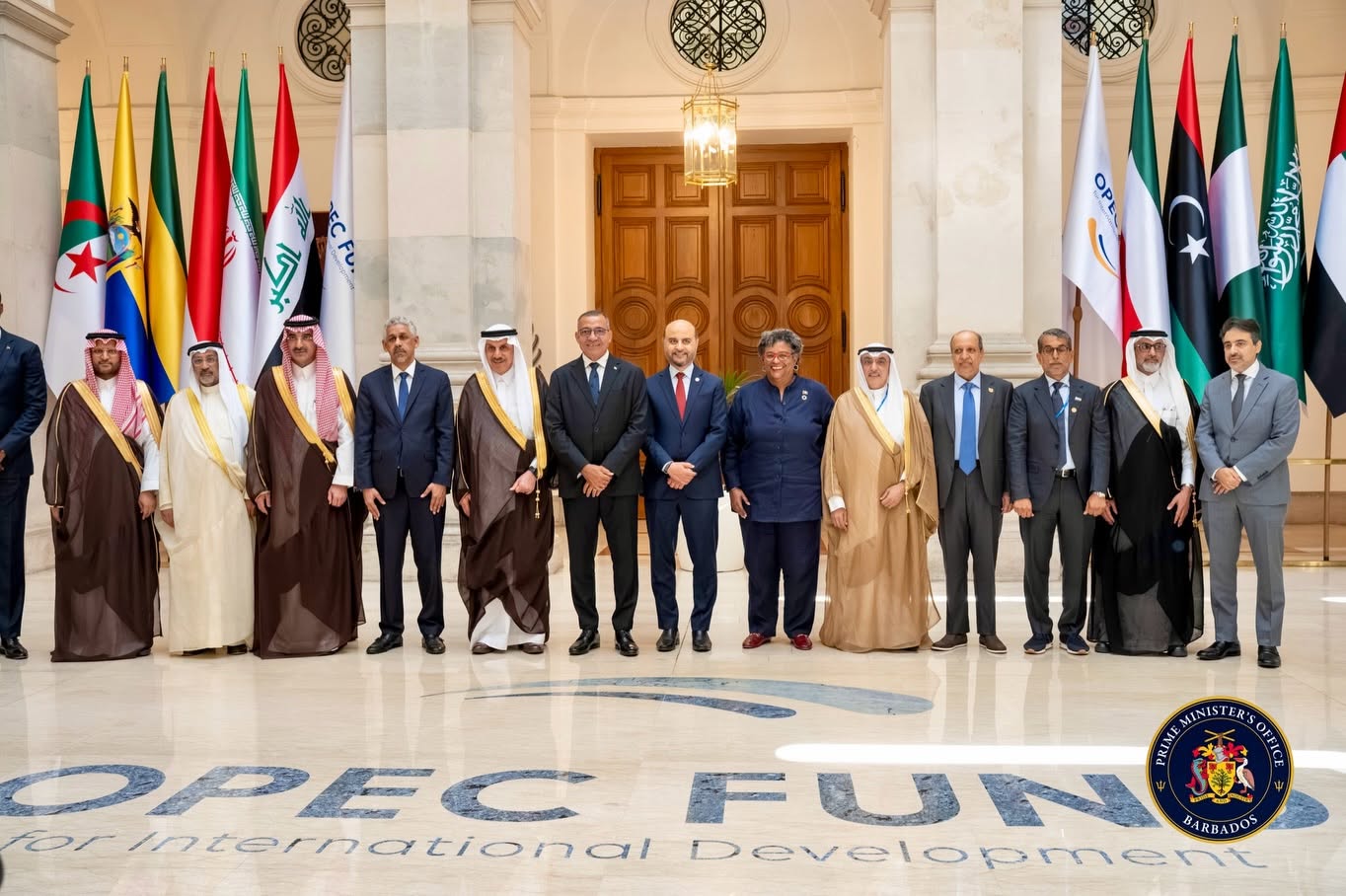
BRIDGETOWN, Barbados - Barbados has formalised a concessional climate financing arrangement with the OPEC Fund for International Development, anchoring a structural effort to reduce the island's borrowing costs for climate-resilience investment at a moment when its service-driven economy faces mounting exposure to extreme weather events.
The Vulnerability to Viability (V2V) Compact, launched at the OPEC Fund Development Forum in Vienna, is designed to give climate-vulnerable nations access to more affordable financing - a direct response to the premium that small island developing states typically pay on international capital markets when funding infrastructure and adaptation measures. Details of specific loan terms and disbursement schedules remain unconfirmed.
For Barbados, the timing is material. The IMF projects GDP growth of 2.5% in 2026 and 2.2% in 2027, underpinned by the island's three principal economic engines: tourism, the international business sector, and foreign direct investment. Each of these sectors carries physical climate exposure - coastal tourism assets are vulnerable to storm damage and sea-level rise, while the island's appeal to international businesses and foreign direct investors rests partly on infrastructure reliability and operational continuity.
The immediate exposure lies in the cost-of-capital differential that Barbados faces when financing climate adaptation relative to larger, less vulnerable sovereigns. High-income small island economies are frequently penalised by credit markets despite relatively strong fundamentals - Barbados recorded GDP growth of 2.5% in 2024 alongside inflation of just 1.4%, a combination that most emerging-market peers would consider benign. Concessional mechanisms such as the V2V Compact, if structured effectively, can bridge this gap, lowering the fiscal drag of adaptation investment and freeing budget headroom for growth-supporting expenditure. For operators in tourism and real estate - sectors that represent the visible face of the island's FDI draw - reduced climate-financing costs translate directly into a more stable investment environment.
The OPEC Fund for International Development, a multilateral lender with a mandate extending across climate and development finance, provides Barbados with a channel outside traditional bilateral or commercial lending markets. The V2V Compact's framing around viability - rather than mere vulnerability - signals an intent to tie concessional access to economic transformation outcomes, though the specific conditionality framework details remain unconfirmed.
Barbados's current account deficit stood at 5.2% of GDP as of the most recent World Bank data, a level that underscores the island's continuing reliance on external capital flows. Climate finance instruments that reduce the cost of necessary adaptation spending are therefore additive to sovereign balance-sheet management at a structurally important juncture, particularly as the IMF's medium-term growth forecast shows a mild deceleration from 2.5% to 2.2% between 2026 and 2027.
With unemployment at 6.5% as of 2025, the economy's trajectory depends heavily on sustained tourism arrivals and continued confidence from the international business sector. Any deterioration in climate resilience - whether through infrastructure damage or reputational risk among foreign investors - would feed directly into those drivers. The V2V Compact represents a concrete step toward addressing the financing asymmetry that climate-vulnerable economies have long cited as a systemic barrier to resilience investment. Whether the instrument delivers at scale will depend on implementation terms not yet publicly disclosed