Russia Accuses Washington of Breaking Trump-Putin Understandings as Ukraine Claims Battlefield Momentum
BEIJING, China - Russia has accused the United States of failing to honour commitments reached between President Vladimir Putin and President Donald Trump at last August's Alaska summit, a charge that signals mounting frustration in Moscow as Ukraine presses its military campaign deeper into Russian territory.
In the space of three days, three senior Russian officials said, without providing specifics, that Washington has not followed through on what they described as understandings established at the Anchorage meeting. The statements mark a notable shift in tone from the Kremlin, which in the months since the summit had consistently expressed gratitude for Trump's mediation efforts and spoken warmly of what it called "the spirit of Anchorage."
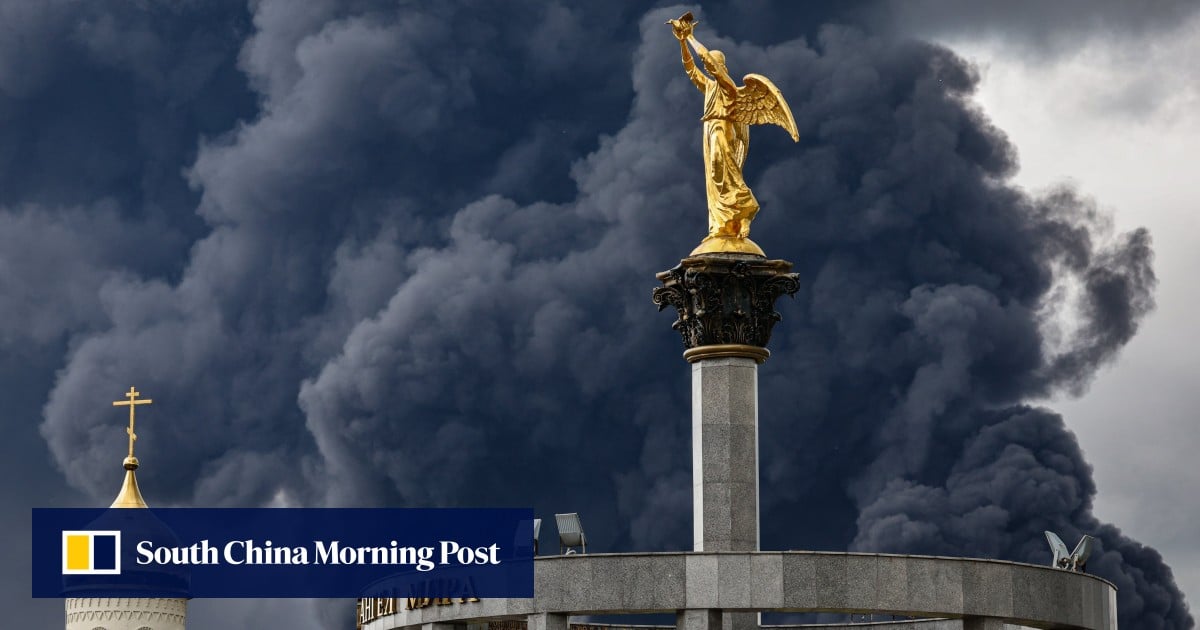
The Russian complaints coincide with a sharp intensification of Ukraine's drone campaign. Two attacks last week struck a Moscow oil refinery, part of a broader pattern of Ukrainian strikes reaching deep inside Russia. Ukrainian President Volodymyr Zelensky pressed his case at a Group of Seven summit, telling Trump and other Western leaders that Kyiv was turning the tide of the war. Moscow has rejected that assessment and has continued heavy attacks of its own.
The phrase "the spirit of Anchorage," as analysts have noted, functions as shorthand for Russia's core contention: that Trump is sympathetic to Moscow's central demand that Ukraine surrender the whole of its Donbas region in exchange for a freezing of current battle lines. Ever since Trump began working last year to end the war - at times criticising Putin but more frequently blaming Zelensky for failing to reach a deal - the Kremlin had framed American diplomatic overtures as evidence of underlying alignment with Russia's position.
That framing is now under visible strain. The three officials who voiced frustration with Washington provided no detail about what specific steps they had expected or what was agreed upon in Alaska. Their coordinated complaints, clustered within seventy-two hours, indicate that Moscow's dissatisfaction has moved beyond quiet back-channel pressure and into deliberate public messaging.
For China, which maintains deep economic and energy ties with Russia while positioning itself as a neutral observer of the conflict, the fracture in expectations between the Kremlin and Washington adds complexity to an already difficult diplomatic environment. Chinese policymakers tracking the war's trajectory as a factor in regional stability and global energy flows face renewed uncertainty about whether the diplomatic framework assembled around the Alaska summit will hold, and what an open rupture between Moscow and Washington might mean for the conflict's next phase.
Moscow's public posture - accusing Washington of non-delivery while simultaneously rejecting Ukraine's battlefield claims and sustaining its own offensive operations - places the Trump administration in an awkward position. Trump has staked considerable diplomatic credibility on his capacity to end the war, and a coordinated accusation from the Kremlin that the United States has failed to honour the spirit of their summit exchange directly complicates that ambition.
What specific understandings Russia believes were reached in Alaska, and precisely which American commitments Moscow expected Washington to fulfil, remain unconfirmed. No senior American officials have publicly responded to the Russian accusations


